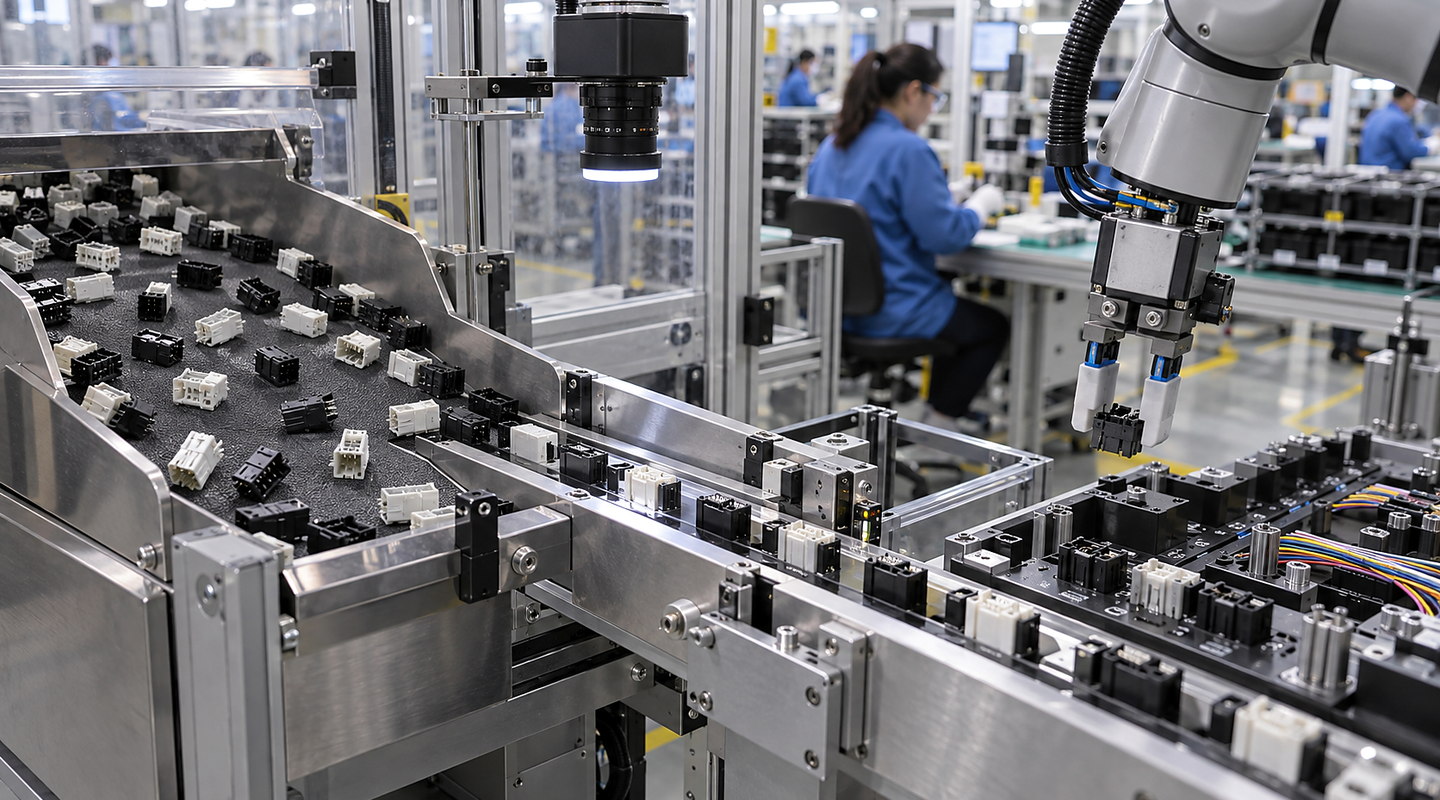
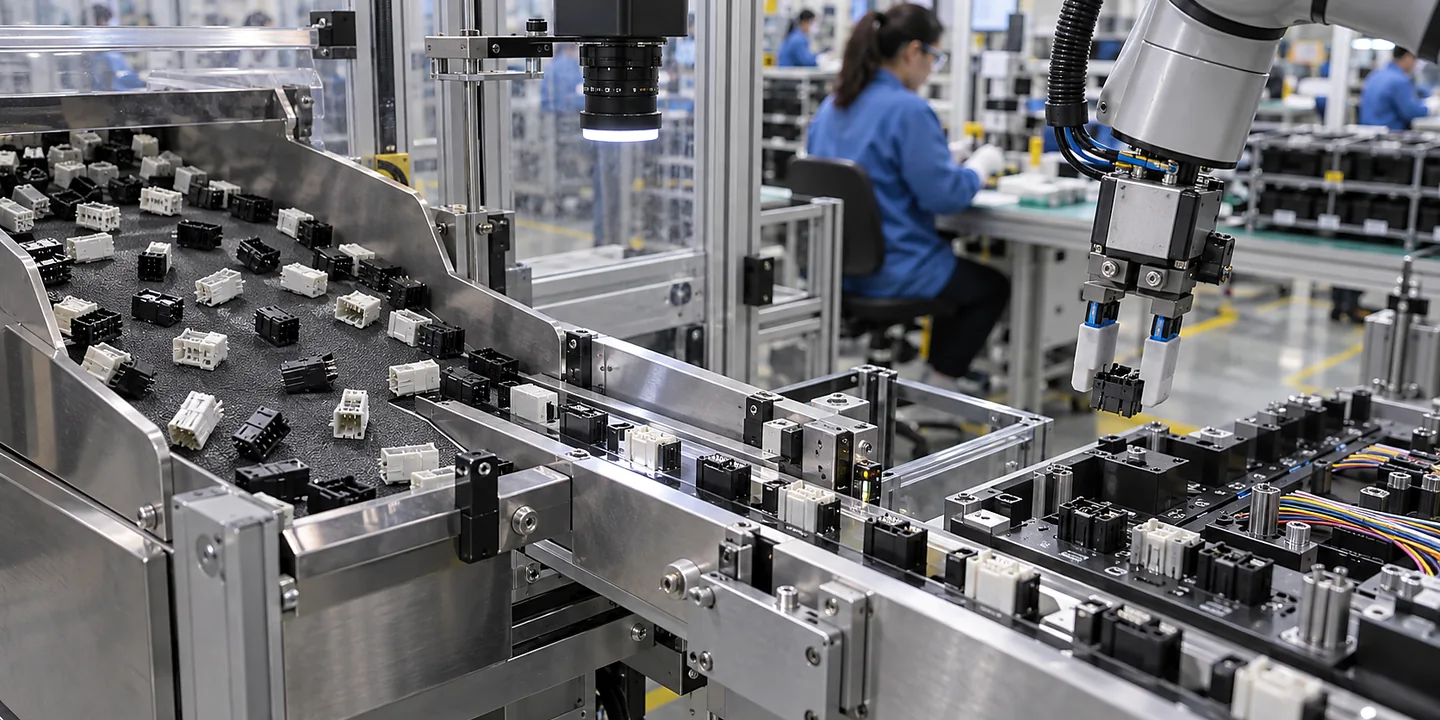
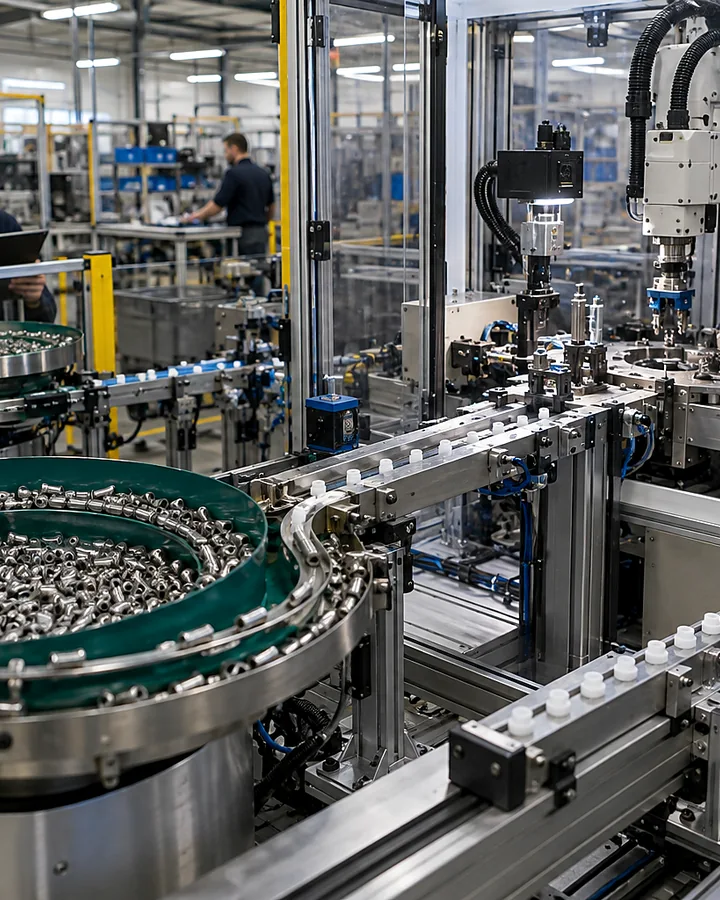
Six useful questionsDescribe what you need from terminal pin feeders before choosing a solution
For bulk presentation using terminal-pin presentation systems, share the normal condition, realistic range and difficult cases the finished system must handle.
Question 1Component Geometry and Variation for Terminal-Pin Presentation Systems
Supply the pin drawing, end features and required insertion orientation, together with normal, marginal and supplier-variant components. Record the component range and include mixed lengths or bent pins where these occur in production.
Question 2Surface, Fragility and Entanglement Behaviour
Identify the surfaces that must not be damaged and the difficult handling conditions. Trial separation, single-part release and transfer with representative pins, checking for damage and whether fragile, flexible, magnetic or entangling parts need a different presentation method.
Question 3Bulk Condition and Replenishment Method
Describe the normal bulk condition, credible extremes and replenishment method. Plan access for replenishment, clearance, cleaning and maintenance, and include these activities in the complete line trial.
Question 4Required Orientation and Delivery Rate
State the required insertion orientation, the position needed by the receiving tool and the usable delivery rate at the downstream process. Check these requirements with representative parts; quoted feeder output alone does not establish usable delivery.
Question 5Escapement and Downstream Pick Interface
Provide the receiving-tool position, mechanical datums, transfer envelope and access requirements. Agree operating modes, line handshakes, permissives, faults, recovery and recipes, including the response when the assembly station cannot accept the next pin.
Question 6Jam, Damage and Recovery Acceptance Checks
Agree the trial method, repetitions, acceptable range and result record. Test delivery, replenishment, jams, damage and recovery under normal, difficult and fault conditions, and define the response when a result falls outside the agreed range.