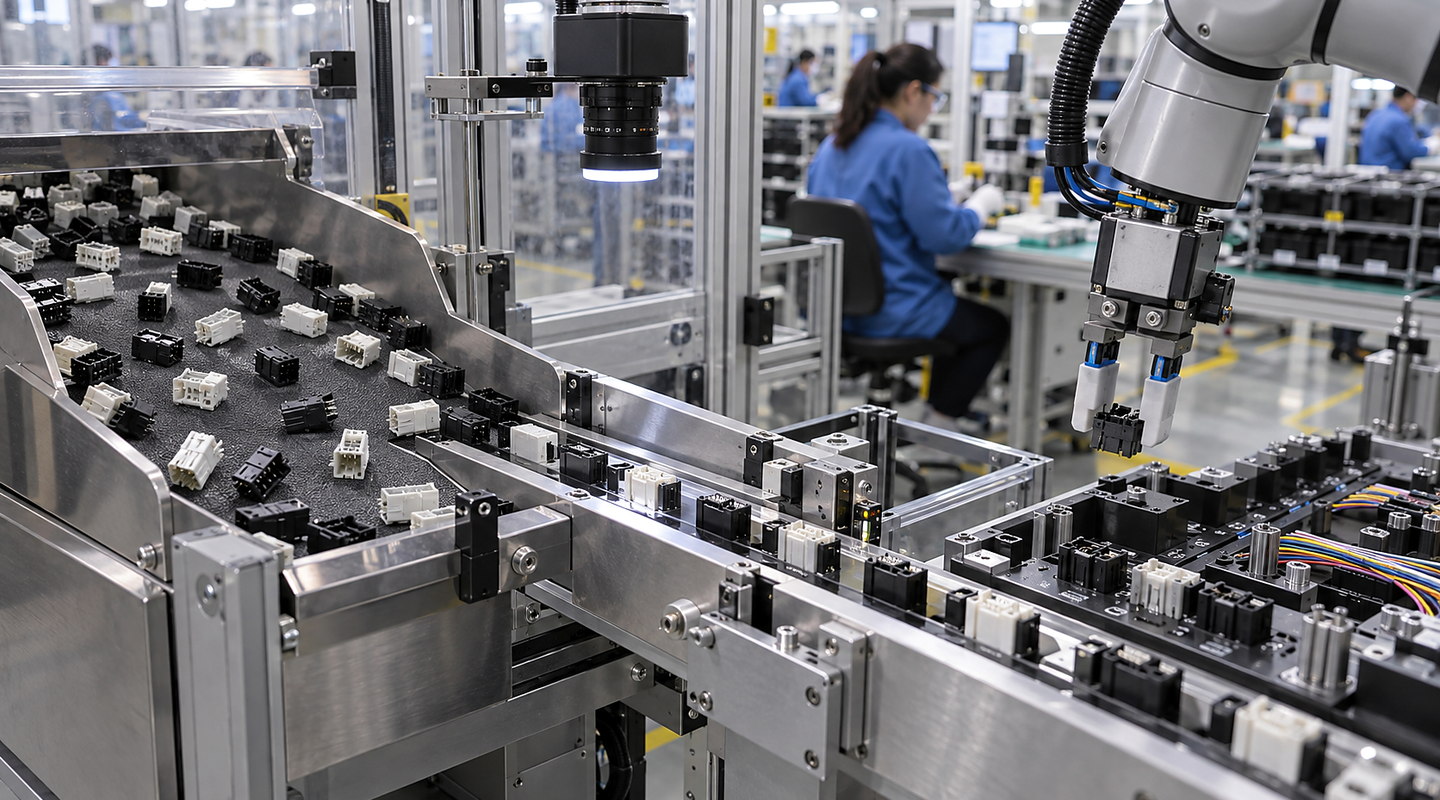
Terminal Pin Feeders: How the Process Works
Follow the operating sequence for terminal pin feeders, from preparing the input and controlling the main task to handling exceptions and checking results.
A terminal-pin feeding trial follows the pins from their normal bulk condition through separation and orientation to single-pin release and transfer to the receiving tool. Define the required end orientation, position and acceptable condition at that handoff. Use the component-sample guide to prepare the pin range.
Count usable pins at the downstream process, not feeder movements alone. Include replenishment, stops and the agreed response when the insertion or assembly station cannot accept another pin; any detection or rejection function needs its own defined scope and evidence.
Understand the complete route from input to accepted output — Terminal Pin Feeders
Review the pin drawing and end features against the intended receiving position. Observe separation, release and transfer with representative normal and supplier-variant pins, checking sensitive surfaces before and after handling. Record where a pin fails to separate, arrives in the wrong presentation or needs intervention.
Discuss your application

Four clear stages for terminal pin feeders
At each stage, you can review how component geometry and variation for terminal-pin presentation systems and jam, damage and recovery acceptance checks affect the next commitment.
- 01
Review Representative Production Components
Share representative production components and the downstream interface, including the normal range for component geometry and variation for terminal-pin presentation systems and the difficult surface, fragility and entanglement behaviour cases.
- 02
Trial Separation, Orientation and Presentation
Compare suitable methods and use focused trials to show how each option performs against bulk condition and replenishment method.
- 03
Develop Tooling, Controls and the Downstream Interface
Connect the equipment to your line, services and controls while resolving required orientation and delivery rate for day-to-day operation.
- 04
Challenge Delivery, Replenishment, Jams and Recovery
Confirm escapement and downstream pick interface, then complete and record jam, damage and recovery acceptance checks before your operating team takes over.
Decisions and results stay connected
| Stage | What happens | What you can review |
|---|---|---|
| Review Representative Production Components | Identify pin drawing revisions, end features, required insertion orientation and surfaces that must be protected. Include normal and supplier-variant samples and credible mixed or bent-pin cases. | The sample register, allowed component range, receiving-tool position and the agreed handling of pins outside that range. |
| Trial Separation, Orientation and Presentation | Assess separation, orientation, single-pin release and transfer using the agreed sample set in its normal bulk condition. | Pin condition before and after handling, accepted presentation at the handoff, unsuccessful releases and interventions linked to the tested setup. |
| Develop Tooling, Controls and the Downstream Interface | Define mechanical datums, the transfer envelope and receiving-station readiness. Agree release, stop and restart responsibilities at the interface. | The interface drawing and state sequence, access for replenishment and clearance, and any detection or data functions still to be specified. |
| Challenge Delivery, Replenishment, Jams and Recovery | Use the agreed trial procedure to assess usable delivery, replenishment and recovery from relevant interruptions. Review affected pins before restarting the agreed sequence. | Accepted downstream deliveries, damage and jam observations, intervention records, recovery checks and unresolved acceptance actions. |
Keep connected responsibilities clear
Your final terminal pin feeders scope must also account for escapement and downstream pick interface, jam, damage and recovery acceptance checks, current regulations and the conditions at your site.
- Sample trials must include normal, marginal and supplier-variant components.
- Quoted feeder output is not the same as usable delivery at the downstream process.
- Fragile, flexible, magnetic or entangling parts may need a different presentation method.